
As businesses pile up more data, the instinct is often to cram every single metric onto one screen, but that usually backfires. When a dashboard tries to be everything to everyone, it becomes a cluttered maze that overwhelms people and gets ignored. Building a marketing dashboard that actually works means moving away from those “look-good” vanity metrics and focusing on tools that actually tell you what to do next to drive real business results.
Creating this level of clarity takes deliberate planning and a deep understanding of your team’s specific needs. From defining your target audience to optimizing visual design, every choice must highlight what is working and provide clear direction on where to allocate resources.
This comprehensive guide from Seven Digital is designed to help you build an interface your team will actually use and act upon effectively.
Define Your Audience and Goals
A dashboard that tries to serve the Chief Marketing Officer, the content creation team, and the performance marketer all at once is destined to fail. Each role requires completely different data to perform its daily tasks. You must narrowly define your target audience and focus on the specific goals, problems, and decisions relevant to them.
Customize by Role
An executive usually wants the big picture, including macro trends, revenue impact, and the overall health of the pipeline. On the other hand, a performance marketer needs to analyze campaign-level ROI, cost per click, and daily conversion numbers. When you tailor your marketing dashboards to these specific roles, you improve efficiency for the entire team because they immediately see the data they need to perform their roles effectively.
Start with Marketing Goals
Before selecting the metrics you want to track, you must establish your high-level objectives. These might include improving brand awareness, generating more qualified leads, or boosting overall sales. Once the primary goal is clear, you can select the specific indicators that measure progress toward that outcome.
The Seven Digital Approach
At Seven Digital, we start every client engagement by understanding their unique objectives. We know that cookie-cutter approaches do not work. By thoroughly evaluating your specific business needs, we help you formulate robust marketing strategies that align with your overarching business targets.
Focus on Actionable Metrics, Not Vanity Metrics
Metrics like pageviews, social media followers, and email opens look great on a screen, but they rarely tell you what’s actually moving the needle. These “vanity metrics” often make it look like you’re winning while hiding the real issues that are holding your growth back.
Choosing Metrics that Drive Decisions
Every metric on your screen should address a specific business challenge. Rather than just counting total visitors, analyze their source and how they discovered your brand. This level of detail identifies which channels generate the highest quality traffic, allowing you to allocate your budget more effectively. Ideally, a high-quality metric is one that the entire team understands consistently, leads to a clear action, and is calculated using a transparent methodology.
Tracking Key Performance Indicators
Working with experts can help you filter out the noise and zero in on what truly matters. Seven Digital helps clients identify and track the exact key performance indicators necessary for maximising ROI. By focusing on data that impacts the bottom line, we ensure your ad spend delivers real-world business growth.
Building Your Dashboard: Practical Considerations
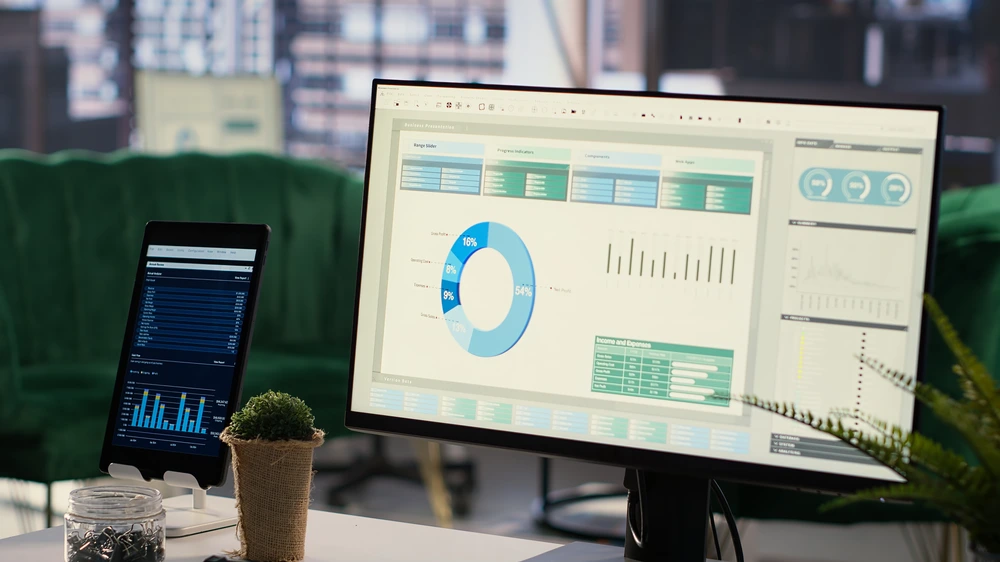
Once you have identified your audience and selected the right metrics, the next phase is structuring and designing the interface. How you present the data is just as important as the data itself.
Structure Data the Way Marketers Think
Organize your layout to mirror the actual customer journey. A logical flow starting from Awareness, moving to Leads, entering the Pipeline, and ending in Revenue helps users quickly spot bottlenecks. This funnel-based organization makes it immediately obvious where prospects are getting stuck.
Marketers also need to compare performance across different channels to spot emerging trends. Transform and standardize your data so metrics like Cost Per Lead can be compared easily across Google, LinkedIn, and Facebook. This cross-channel visibility is essential when you are determining how to scale paid campaigns efficiently.
Data Integration and Accuracy
To get a complete picture, you must close the loop by integrating your top-of-funnel data with your CRM sales outcomes. Closed-loop reporting ensures you measure how campaigns impact final revenue, rather than just tracking top-level lead volume. If the data is inaccurate or siloed, your team will quickly lose trust in the tool.
Design Principles for Clarity
People naturally scan screens in a Z-pattern, meaning the top-left corner receives the most visual attention. Place your most critical metrics, such as total revenue or return on ad spend, in this prime location. Support these primary numbers with relevant charts below them.
Use line charts to show trends over time and bar charts for direct comparisons. Avoid confusing formats like 3D graphics or using pie charts for time-series data.
Additionally, dedicate roughly 20 to 25 percent of your layout to white space. This gives the data room to breathe and reduces visual fatigue for the user. Limit your palette to three to five functional colors to prevent the screen from looking cluttered. Use visual cues like conditional formatting (green for success and red for drops) to instantly signal what needs immediate attention.
Optimisation and Continuous Improvement
A reporting interface is never truly finished. As your business grows and your strategies shift, your tracking tools must evolve to keep pace.
Ensure Speed and Freshness
If your team is looking at outdated numbers, they will stop trusting the system and resort to guessing. Schedule automated data refreshes so the information is always current. Add interactive filters that allow users to explore the data by adjusting date ranges, specific campaigns, or individual channels.
Regularly Reviewing and Refining
Track how often your team actually logs in and which sections they interact with the most. This usage data helps you continuously refine the tool, ensuring it remains a vital asset for decision-making. Remove unused charts and add new metrics as different business questions arise.
The Role of Analytical Reporting
Detailed, data-driven insights are the backbone of sustainable business growth. Professional analytical reporting goes beyond surface-level numbers. It examines user behavior, identifies emerging market trends, and highlights specific opportunities to optimize your ongoing campaigns.
Data-Driven Decision Making
Building effective marketing reporting dashboards requires discipline, clarity, and a strong focus on business outcomes. By defining your audience, eliminating vanity metrics, structuring data logically, and optimizing your visual design, you create a powerful asset for your organization.
Relying on accurate data removes the guesswork from your daily operations. It empowers your team to make confident, informed decisions that directly impact revenue and growth.
Seven Digital has the expertise to help you build transparent, results-driven campaigns. Our multi-disciplined team combines creative excellence with rigorous data analysis to deliver measurable outcomes. Explore all services to learn how we can help your business navigate the digital landscape and achieve exceptional results.
The Psychology of Data Consumption

If you want people to actually use your analytics dashboards, you have to keep the brain drain in mind. Our short-term memory can only handle so much at once before we just glaze over. Instead of dumping everything on the screen, try “progressive disclosure.” Show the big-picture stuff first, and let people dig into the messy details only when they need to. This stops your dashboard from looking like a scary wall of numbers that everyone ignores.
Data also needs a bit of a story to make sense. A chart on its own is just lines and bars; it needs context. It’s always a good idea to leave a little space for notes like “Insights & Observations” right next to your main visuals. This lets you explain the “why” behind the “what.” For example, if you see a huge jump in traffic, it looks great, unless it was just a bunch of spam bots. Without that little note, someone might end up throwing money at a trend that isn’t even real.
Bridging the Gap Between Data and Culture
Even the most amazing dashboard is worthless if your team doesn’t know how to use it or trust the numbers. To get real value from your data, you need to build a culture where everyone feels okay questioning the reports and asking “so what?” instead of just accepting everything at face value. This includes investing in training and making sure everyone is aligned on what those KPIs really mean for your business.
That’s where Seven Digital comes in. We don’t just set up the technical side of your reporting; we also coach your team on how to cut through the noise and spot the trends that really matter. We help your tools grow from simple records of what happened yesterday into a roadmap that shows you exactly where your next growth opportunities are hiding.